
Smart Mirror in a Retail Store: What an Install Involves
A smart mirror installation requires connecting a digital catalogue to physical floor space, training staff, and ensuring five feet of clear standing room. Deployments succeed when retail operators prioritise strategic siting over novelty, turning the unit into a reliable sales channel rather than a bottleneck.
We were standing in the middle of a shop floor at 9:00 PM, looking at a reflection that finally matched the blueprint. That was the moment we knew the deployment was solid. It is one thing to write code in a controlled environment. It is another entirely to put a smart mirror in a retail store and watch it survive contact with reality. The technology is the easy part. Whether a unit actually earns its floor space is decided by siting, catalogue connection, staff habit and the first three weeks of operation. If you are preparing for a rollout, this is what that process looks like on the ground.
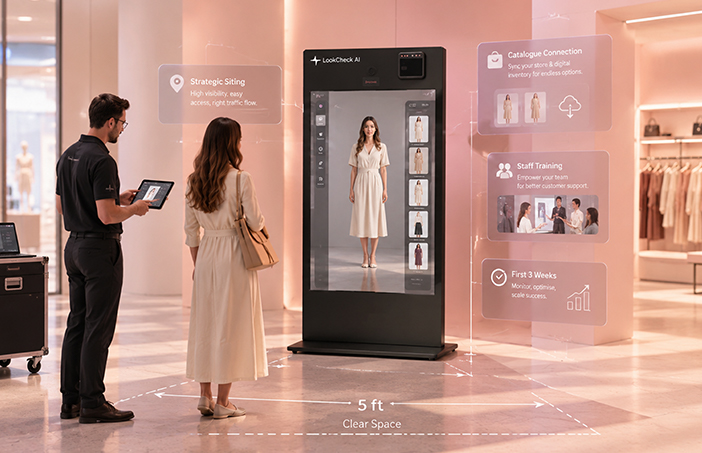
Where the mirror goes decides most of the outcome
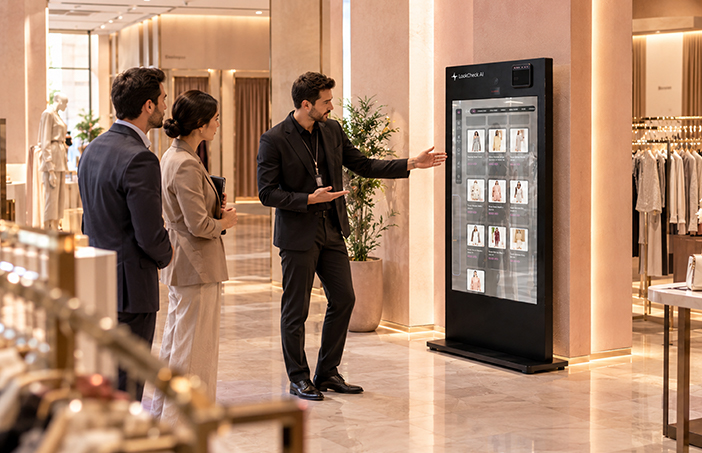
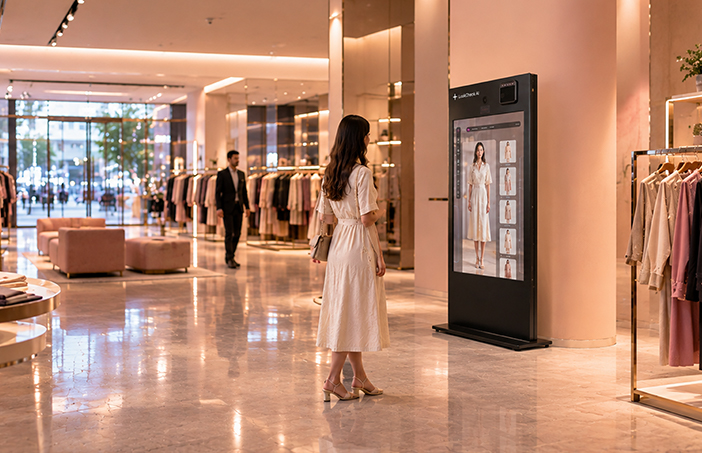
A smart mirror needs around 5 feet of clear floor space in front of it for a try-on. That single number rules out half the potential locations in any given layout before we even start talking. The unit itself is a 55 or 65 inch interactive display capturing on a top of the line 4K ultra HD camera. It demands physical presence, meaning we treat it as a piece of architectural geometry rather than just a screen.
When I walk a shop floor with a store manager for the first time, we look at sightlines from the entrance. A customer needs to see the unit the moment they cross the threshold. We check the ambient lighting to ensure the camera captures accurate detail without glare. Then we look at proximity. Placing it too close to the traditional fitting rooms invites comparison. Placing it too close to the till creates a bottleneck.
A bad location throttles footfall immediately. If a spot creates a queue that spills into the main aisle, the store manager will turn the mirror off to clear the floor. I always ask where the dead zones are. Activating a quiet corner is often a better strategic move than crowding the high-traffic areas. Take Breakout's new outlet at Packages Mall in Lahore, which is the first smart mirror live in Pakistan. We worked with their team to find a position that drew foot traffic naturally, balancing visibility with the operational reality of a busy retail environment.
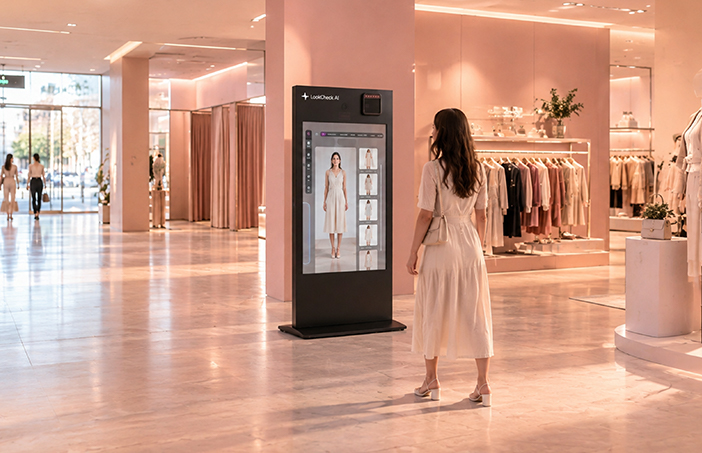
Connecting the catalogue, and what endless aisle means in practice
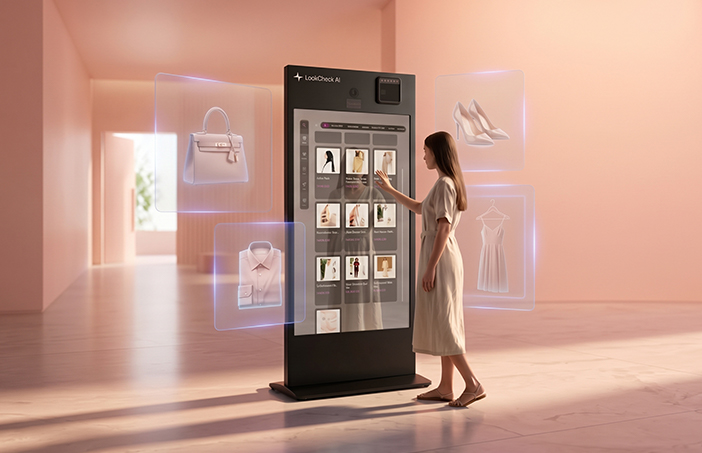
The real utility of virtual fitting room technology begins when a location stops being limited by its physical square footage. Connecting a store's full catalogue means a customer can browse inventory far beyond what is hanging on the rails that day. This is what endless aisle retail looks like in practice.
A shopper can take a physical garment, scan it with the built-in barcode scanner, and immediately add it to their try-on queue. If they see a paired item on the screen that they want to feel in person, they can request the physical item directly from the interface. The system pings the floor staff to bring it over, keeping the customer engaged rather than wandering. Generating a finished render takes about 20 seconds, maintaining the momentum of the sale. We built the AI smart mirror to bridge the gap between digital discovery and physical fulfillment.
Once the try-on is complete, the transaction happens exactly where the customer is standing. They can complete their checkout at the integrated payment terminal on the unit itself, or take their selections to the counter if they prefer. The e-invoice and complete order history go straight to their WhatsApp. This changes the fundamental equation for store managers. Stock depth is no longer a hard cap on what a specific location can sell. Every unit on the floor suddenly has the sales potential of a flagship warehouse. Integrating this level of catalogue depth ensures the mirror functions as a true sales channel. It is the reason why the shop floor is being instrumented for live data.
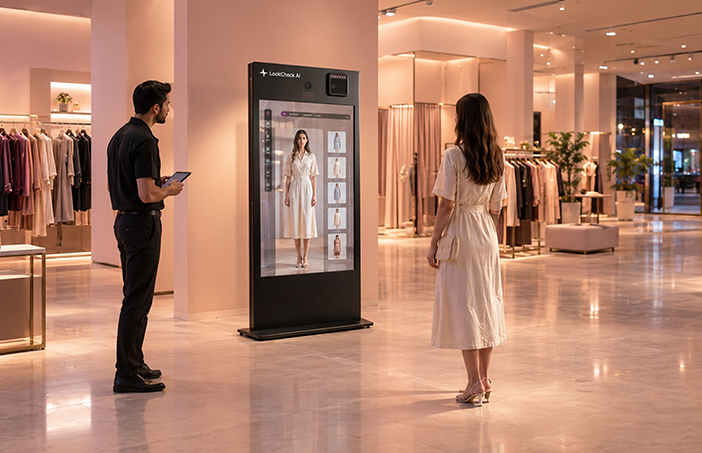
Training the floor staff
Getting the hardware running is only half the job. A smart mirror installation lives or dies by the people working the floor. We scheduled to train the floor staff, and the reality of that process is always revealing. The training itself is rarely about the software. The interface is intuitive enough that anyone who owns a smartphone can navigate it.
The real training focuses entirely on when to offer the mirror to a customer. Week one behaviour usually involves staff treating the unit cautiously. They point it out as a feature but step back. By week three, the dynamic shifts. The best staff use it proactively to save a sale when a physical size is missing, or to suggest a multi-category outfit build.
You can always predict a successful rollout by watching who picks the habit up first. It is rarely the most technically minded employee. It is usually the floor veteran who immediately recognises a tool that keeps a frustrated customer engaged. I watched during an afternoon shift, and it was a perfect example of how human habit dictates hardware success. We spend our time teaching staff how to read a customer's hesitation and introduce the try-on as a natural solution. Uptime matters, but adoption matters more. Our deployments succeed because we sit with the managers and map out exactly how the mirror fits into their existing sales script.
What it changes about stock planning
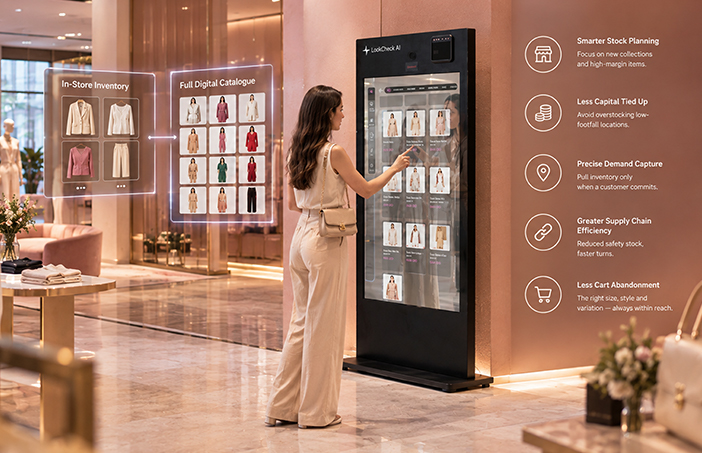
This level of integration forces a rethink of traditional inventory distribution. A small location can now carry a massive digital catalogue, completely altering what that store is capable of achieving in a given quarter. You no longer have to guess which sizes to stock deep in a low-footfall branch, tying up capital in garments that might never move.
If you run operations across a mixed portfolio of stores, how are you currently handling stock depth across your smaller locations? Usually, it means making hard compromises and accepting lost revenue when a specific item is missing. The mirror shifts that dynamic entirely. You can hold thin physical inventory for tactile evaluation, letting the customer feel the fabric, while relying on the digital catalogue to secure the actual sale for variations.
We see brands running mirrors now adopting this exact model. They keep the physical space focused on the newest collections or high-margin items, using the interactive display to handle the long tail of their inventory. The impact on supply chain efficiency becomes obvious within the first month. Store managers stop requesting excessive safety stock because they know the digital backstop is reliable. It is a fundamental shift from pushing inventory out in the hope of a sale, to pulling it precisely when a customer commits. This operational reality is what try-on does to cart abandonment in a physical setting.
What to prepare for, honestly
Store managers always have practical questions about capability and privacy, and we prefer to address them directly. First, AI size recommendation on smart mirrors operates with a margin under one inch on garment categories. It is a precise tool, but we are upfront about its scope.
Second, unstitched fabric renders require specific setup with our team. It is a complex visual process that demands our engineering input rather than being a self-serve feature. If unstitched garments are a significant part of your catalogue, you should plan for that conversation early in the deployment timeline. We map the rollout accordingly so expectations align with operational reality.
Finally, the question I get asked most often on the floor concerns data security. Customer images are encrypted, processed to generate the render, and then immediately deleted. Nothing is stored, and no customer data is ever used to train AI models. Rendream is ISO 27001:2022 certified, which provides the necessary guarantee for retail operations handling sensitive information. A shopper must use their own photograph for the system to work. Providing that level of privacy assurance is non-negotiable for consumer trust. There is no spin here. It takes work, alignment, and a willingness to adapt floor habits, but the operational returns justify the effort.
A Major Operational Commitment
Putting a smart mirror in a store is a major operational commitment. It requires planning, realistic expectations, and a clear understanding of your physical space. If you are evaluating how this technology might fit into your physical locations, we are available to outline the logistics. I am happy to walk anyone through what a real-world install actually involves, step by step, for your specific floor plan.
ISO 27001:2022 Certified Architecture
LookCheck operates under strict zero-retention policies. In-store images are encrypted, processed in memory, and immediately deleted without saving or using them for training.
Frequently Asked Questions

I am an Experience Architect dedicated to designing memorable journeys that turn concepts into lived realities. My job is to remove the cognitive load of complex information and replace it with a clean, intuitive, and empowering visual workspace. I use the principles of "Learn-by-Doing" to ensure that your audience grasps the true value of your vision from the very first interaction. By focusing on "Moments of Delight" and reducing technical friction, I help you build a brand that people actually love to use.