
Virtual Try-On and Cart Abandonment: What to Measure
When discussing virtual try-on cart abandonment, the global average of 70.22 percent from the Baymard Institute is routinely cited. Quoting this benchmark is common practice, yet it changes absolutely nothing for your storefront. The more valuable undertaking is identifying the precise moment a fashion shopper loses confidence.
A macro statistic cannot diagnose a micro failure. Evaluating the checkout page only reveals the symptom. True resolution requires examining the product page where the hesitation actually forms.

Cart abandonment begins on the product page
The purchasing decision breaks down in the quiet seconds where a shopper attempts to picture a garment on their own body. They review flat size charts, observe a model who stands at a completely different height, and scroll through six photographs of an item worn by somebody unlike them. This creates a fundamental uncertainty regarding fit and appearance that text descriptions simply cannot resolve. The customer adds the item to their basket as a placeholder, hoping to find clarity later in the session.
They navigate toward checkout with unresolved questions. The cart itself merely acts as a holding area for deferred decisions rather than a definitive commitment to purchase. When they ultimately leave the site, the failure is logged at the end of the funnel. The cart simply records the abandonment. The actual hesitation originated much earlier in the journey.
The standard conversion rate optimisation playbook focuses relentlessly on the last 10 percent of the customer journey. Practitioners implement free shipping thresholds, enable guest checkout flows, and integrate alternative payment options. These are all necessary improvements that yield measurable results, but they address logistical friction rather than product uncertainty. None of these downstream adjustments touch a shopper's unresolved question about how a specific dress will drape or whether a pair of trainers suits their style.
We have to name this gap plainly. You cannot optimise away a fundamental lack of visual confidence by simply offering a faster payment gateway. If the shopper cannot visualise the product on themselves, making it easier to buy does not solve the root problem. The friction exists in the visual evaluation phase, meaning the solution must also be visual.
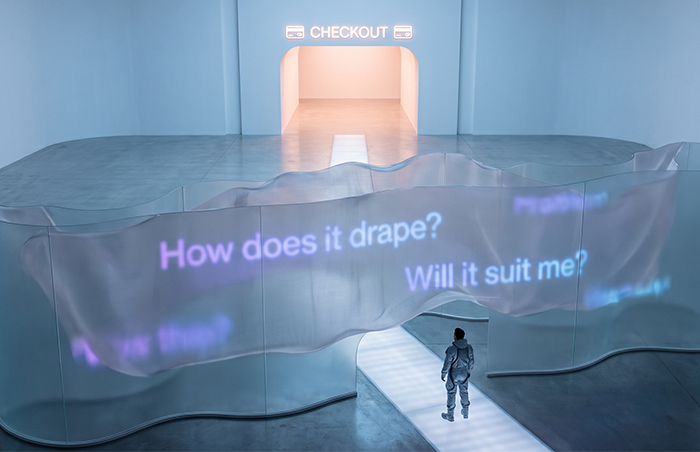
Resolving visual uncertainty with virtual try-on
LookCheck addresses this specific product page hesitation by providing a photorealistic render on the shopper's own body. The process requires roughly 15 seconds to generate a finished image. This capability extends across garments including unstitched fabric, footwear, hats, eyewear and accessories. Shoppers can also engage in multi-category outfit building to see how distinct pieces interact.
All rendering runs on Rendream servers, ensuring that your storefront page speed remains completely untouched. Data privacy is handled with strict compliance, meaning images are encrypted, processed, and immediately deleted. We store nothing and use no user images to train models, maintaining our ISO 27001:2022 certification.
By allowing the shopper to answer their own visual questions immediately, this technology removes the primary source of product page uncertainty. This is the mechanism by which abandonment rates begin to shift. The customer moves to the cart with definitive intent rather than tentative hope. Integrating virtual try-on for Shopify directly into the flow allows shoppers to see a render on a real body, creating a tangible difference in their purchasing confidence.
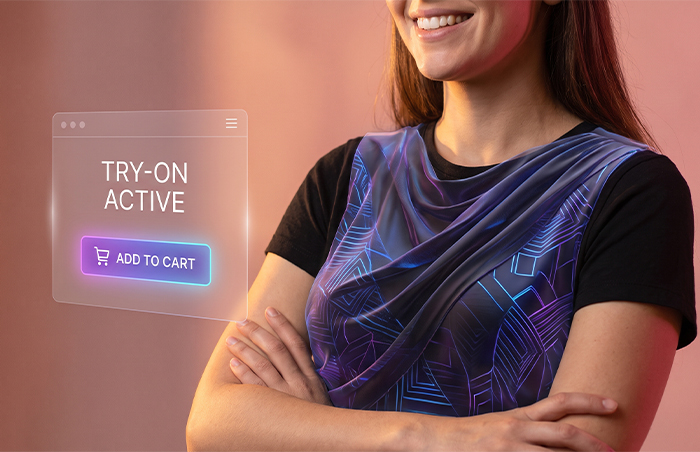
Run a controlled pilot and measure four metrics
Testing this requires a methodology that a finance director will respect. A proper pilot demands a minimum duration of 60 days to gather statistically significant evidence. To evaluate impact accurately, avoid basic before-and-after comparisons; instead, measure an exposed group against an unexposed control group. This isolates the technology's impact from seasonal variations, marketing campaigns, and inventory changes.
The measurement hierarchy follows four specific metrics in a strict order. You begin by tracking the product page to add-to-cart rate for the exposed group. Next, you measure the cart abandonment rate to see if that initial intent translates into completed orders. The third metric is average order value, as increased confidence often leads to larger basket sizes. Finally, you monitor repeat purchases inside a 30-day window to evaluate post-purchase satisfaction.
It is crucial to segment your data by category. A structured dress and a pair of canvas trainers do not behave alike, and blending their performance obscures the reality of your results. You must also name your sample size problem honestly if your traffic volume is low. State clearly what your pilot cannot prove, acknowledging any external variables that might have influenced the outcome. This level of rigorous attribution builds credibility when you present your findings.

Four questions to ask a visual technology vendor
When evaluating visual technology, you need specific, scoped answers rather than marketing narratives.
- Ask for a numeric accuracy figure with a clearly defined scope.
- Request details on which exact categories are supported by specific capabilities.
- Inquire about where user images are transmitted and the exact duration they are retained.
- Verify the active render latency on a live, functioning product detail page.
Answering the third and fourth questions for LookCheck is straightforward. As mentioned, we process and delete images immediately without storing them, and our render latency is roughly 15 seconds. If you look at the brands running it live on our platform, you will see how these metrics hold up in real commercial environments. Demand this same level of specificity from anyone you evaluate.

Return rates require rigorous attribution
There is a reason I do not publish an unqualified return-rate reduction figure. An unscoped return metric usually hides changes in return policies, seasonal shifts, or aggressive discounting that happened concurrently. Isolating the exact impact of visual rendering on returns requires a level of attribution that most pilot setups simply do not possess.

Industry benchmarks and your own evidence
I will, however, point to the broader industry benchmarks when they are properly sourced. For example, Perfect Corp has documented a conversion lift of up to 2.5x with their visual technology implementations. I offer that as the industry's number to demonstrate the ceiling of what is possible when the deployment is executed correctly.
For our own deployments, the evidence sits with the retailers. The UK bespoke tailoring brand Alex Rose has run our technology online for over a year, and the client described the integration as transformational. I will always prefer that you rely on your own controlled pilot data rather than accepting anyone's headline case study without scrutiny.
You need your own evidence to make an informed decision. This is why the free plan on the Shopify listing exists. It allows a brand to run a real, measurable test on their own traffic before paying for anything. You can establish your baseline, expose a group, and see exactly how the numbers shift for your specific inventory.
ISO 27001:2022 Certified Architecture
LookCheck operates under strict zero-retention policies. In-store images are encrypted, processed in memory, and immediately deleted without saving or using them for training. Read our security practices.
Frequently Asked Questions
LookCheck for e-commerce
Ready to try LookCheck online?
See LookCheck on a live catalog and find the right plan for your storefront.
Try the live demo